Daily Quest
Status Update — How's your mind today?
Loading…
🔇 Quiet Kindness: keep it private / tweak
Three optional shortcuts. Pick any, or none.
Everything stays on your phone. We don't collect your name, email or number.
Get a nudge at the time you choose, on the days you choose. It goes in your phone's own calendar.
Open today's quests without scanning, straight to your college.
Save your personal code on this phone so the box is already filled next time.


We know college students care deeply. You volunteer. You support each other. You want to make a difference.
The challenge isn't that you're not kind — it's that the environment makes it harder for that kindness to find consistent expression and create the connections you're seeking.
Kindness isn't about being perfect. It's about giving a damn: about yourself, the people around you, the spaces you share.
And when you practice it daily? Small actions add up to real change.
First off, you're not broken. But we know the reality you're navigating is genuinely hard:
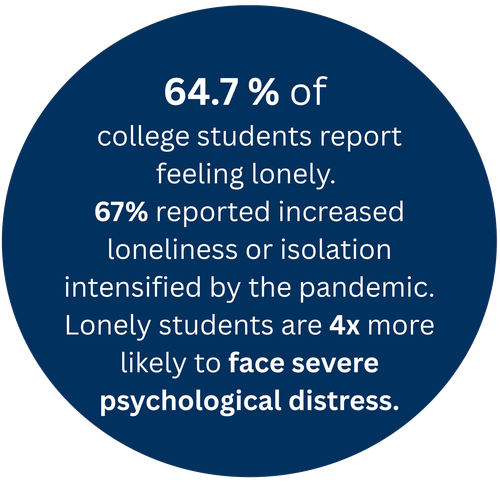
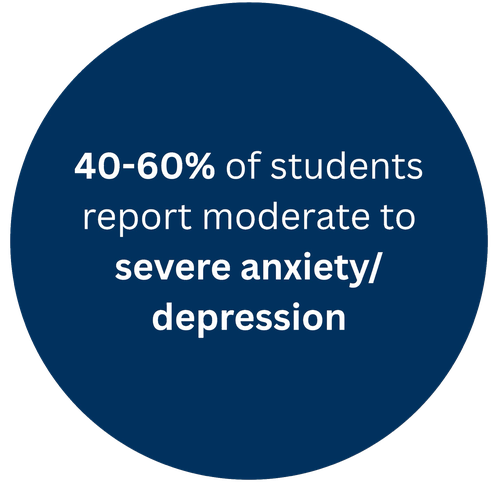
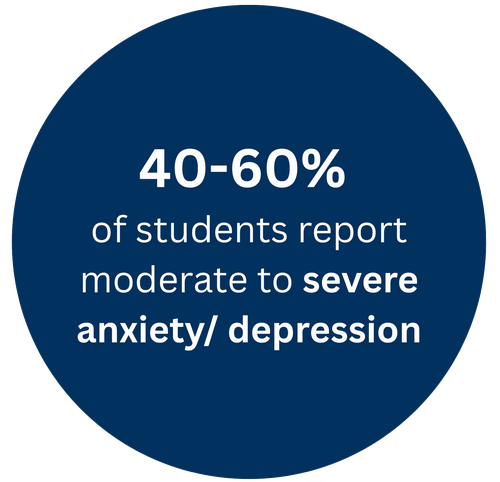
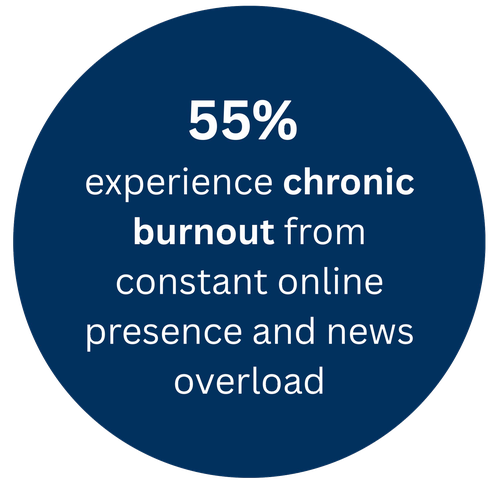
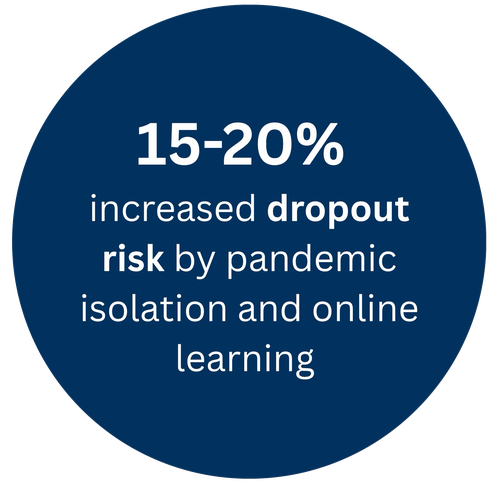
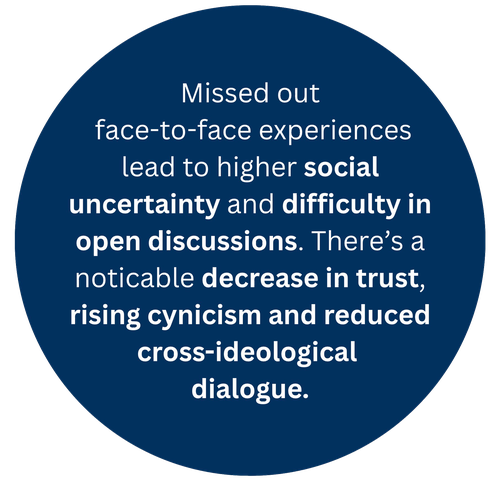
It can change. You don't have to do it alone, and it doesn't require any heroic effort. Instead, the change happens through small, consistent actions carried out by thousands of students working together.
That's exactly what KUL Cup is: daily, voluntary quests designed to fit into your everyday life — be mindful of your surroundings, help a fellow student, try something new, think about what really matters. Ignore quests that don't suit you and adapt what feels good.
What happens when you do this? Not much on its own. But when thousands of students come together over the course of a year, something changes. Loneliness decreases. Connections grow stronger. Campus culture shifts, bringing students closer together, and individual small acts grow into collective impact.
Beyond your campus, you'll help gather evidence that large-scale prevention actually works — your participation helps advance social research in a powerful way and could transform how colleges address student wellbeing everywhere. Learn more about our research →
You're already kind. KUL Cup turns that into a daily fun challenge with meaningful impact.
Kindness isn't one thing. It shows up in different parts of life.
That's why KUL Cup quests are organized into 6 categories. On their own, they're small. Together, they build connection, empathy, and trust — quietly, over time.
Rebuilds our capacity to show up
We can only give what we have. Running on fumes doesn't make us noble — it makes us exhausted. This creates the space to actually be present.
Activates face-to-face connection
Loneliness doesn't go away by scrolling. Belonging is built through small, repeated interactions with real people — the fastest route from "I don't know anyone here" to "this place feels like mine."
Builds awareness of the spaces and life we're part of
Your environment extends beyond campus — parks, streets, natural spaces, the planet. When you care for these places and the living things in them, you stop being a visitor and start being someone who protects what's fragile.
Adds lightness to the routine
Sometimes the fastest way to connect is through something ridiculous — shared laughter, making art, spontaneous play. These moments break barriers and create bonds instantly. We can't build community through stress and deadlines.
Stops us from assuming we already know
It's easy to coast through life thinking we've got things figured out. Curiosity interrupts that. Asking questions, learning something unexpected, seeing things from a new angle — indifference closes doors, interest opens them.
Makes space for honest self-reflection and real conversation
We can't always stay on the surface. Sometimes we need to examine our own patterns and assumptions. Other times we need deeper conversations — being vulnerable, listening to perspectives different from ours. That's where growth and trust happen.
All quests are research-informed on kindness practices and based on social work principles. They are:
Daily quests take 1–20 minutes and are flexible — adapt them, make them your own, interpret them however makes sense. There's no single "right" way. Participation is always your choice. Skip what doesn't resonate. Share what does. Keep it private if that fits better. Your call.
Twice a year, we ask you what changes could make your surroundings 1,000 times better — once for your campus, once for your neighborhood or city.
#KULCupWish offers something in addition to your campus's existing feedback channels: a direct, anonymous way to submit ideas without formal processes. We keep it simple: just grab your phone, type in your wish, and submit it using your personal code.
When you submit your wish to us, we take it seriously — whether it's about improvements, events, resources, or community projects. Your campus administration sees every suggestion. We help identify the most effective and feasible ideas.
The best part — it won't just stay at the idea stage. Some of them will actually be implemented. Your campus administration can see directly what students want and act on it. Plus: KUL Cup co-funds at least two wishes per year (initially two wishes selected from all college submissions, at least $2,000 per wish, increasing with greater participation).
When your wish comes true, you'll realize that your voice matters and that you're making an impact. You're not just a participant on campus — you're actively helping to shape it!
Throughout the year, on certain days you'll find quests with thought-provoking questions that invite you to reflect. You'll be redirected to our digital whiteboard, where you can answer the question anonymously and earn points for the leaderboard as usual.
But here's the twist: after you submit your answer, you'll see rotating anonymous answers from your fellow students — you can read along, but no one knows who wrote what. No usernames are displayed, and posts cannot be liked or commented on.
Some things are easier to say when you don't have to worry about reactions. The whiteboard creates space for authentic expression without losing face — thoughts and feelings you might not share in a conversation.
We filter out hate speech, content related to self-harm, and doxxing, but we don't filter out genuine emotions. Authentic reflections remain visible, because genuine connection requires honesty, not forced positivity.
When you read what others write, you realize you're not alone. "I'm not the only one who feels this way" has a completely different impact when you've kept it to yourself until now.
Your campus admins can see in the background what was posted, but not who posted it. This gives them an honest insight into students' mood and allows them to better respond to your needs.
The quests don't just reward you with fun moments. Your college is competing in a nationwide contest throughout the year to win prize money and unlock milestone rewards for your community.
At the end of the academic year, we crown the top three universities nationwide and award prize money.
Plus, there are awards throughout the year:
The best are put in the spotlight before winter break.
The frontrunners are recognized before final exams.
The champions are crowned, and prizes are distributed.
You're in the competition all year round and can show what your college community is made of!
Your kindness deserves to be rewarded. That's why KUL Cup has set three milestones (bronze, silver, gold chests) for every college that automatically unlock rewards for your campus community when reached. No matter where your college ranks on the leaderboard, collecting points is worth it!
Treasure chests may contain:
The point thresholds are adjusted to the size of your college, ensuring fair competition for everyone.
Plenty of chances to win. A year full of excitement and really good rewards!
Every college is measured with the same ruler. It doesn't matter if you have 2,000 students or 20,000, or if you joined last week or last spring. The winner is the campus with the strongest culture of kindness.
The share of your campus that played in the last 28 days. Measured against your reported enrollment, never against raw totals.
How often those students play. A daily quest every day plus the weekly quest every week earns close to full marks. It's capped, so grinding can't win.
The share of days when at least 5% of your campus played. One pep-rally spike earns one day, not the month.
Participation over the last 14 days compared with the 14 days before. Flat earns half marks and doubling earns full marks. A brand-new school starts neutral, never penalized.
Percentages, never totals.
A small campus and a huge one can earn the exact same score. Only the share of students who play counts.
Same ruler for every school, always.
Only the last 28 days count, so old points never pile up. A school that joined last month can overtake a school that has played for a year.
1 + 1
One daily quest and one weekly quest per code.
The database blocks anything extra. Bots, repeat taps, and one super-eager student can't move the score. The only way up is more students taking part, more often.
Graduates never shrink or inflate your score. Each term, your school confirms its enrollment, and that number is the base for Participation.
KUL Cup is anonymous, so it can't know who graduated. Three signals work together: each keytag batch carries an expected graduation term, your school admin confirms at term close-out, and students can tap "Graduated? Tell us" on their own portal.
After graduation, codes move to the Alum league 60 days after the term ends. Alums keep playing and compete with other alums, but they never count in the campus score.
New students are welcome right away, and their points are theirs to enjoy. A new cohort joins the campus score after a 14-day grace period.
Why? Without it, every fall intake would drag a school's percentage down simply because new students haven't received their keytags yet. After 14 days, they count fully, just like everyone else.
No. Participation is measured against your reported enrollment, not against how many codes were issued. More keytags don't help. More students playing does.
Schools under 28 days old are judged on the days they've been live, and their Momentum starts neutral instead of penalized. A strong first month can climb fast.
KUL Cup runs on the honor system on purpose. Every code can log one daily and one weekly quest, enforced by the database, so extra taps can't add points. Fraudulent or abusive entries can be removed.
Honest answer: a small campus's score does bounce more from week to week than a big campus's, because fewer students means more room for chance. To soften that, we use credibility weighting. A campus's score is blended slightly with the network average, in proportion to its size. A 15,000-student campus keeps about 97% of its own score. A 1,000-student campus keeps about 71%.
This reduces luck. It doesn't erase it, and we'd rather tell you that than pretend.
School A has 3,000 students and has used KUL Cup for 5 months. School B has 27,000 students and has used it for 3 months. Both play the same way: 40% of students played at least once in the last 28 days, each of them plays about 0.9 quests a day, 22 of 28 days passed the 5% bar, and participation was flat.
School B has nine times as many students and logged nine times as many quests. If we ranked by totals, B would crush A. Because we rank by culture, they tie at 580. Size and months of play both dropped out.
Credibility weighting nudges the final numbers by a few points at most (A keeps about 88% of its own score, B about 98.5%).
Say only 30% of School B's students played, and 20 of 28 days passed the 5% bar. Everything else stays the same. B's score drops to about 525, and School A wins. Culture decides, not size.
The score is a snapshot of the last 28 days, so it moves. That's the point. Every school can climb at any time, and every school can slip.
Questions about how your school is scored? Ask us any time.
Most contracts hide the parts that matter in tiny print. We did the opposite. Every rule below is in BIG PRINT, with a plain-words version right under it. If it isn't here, it isn't a rule.
Students never pay anything. Skip any quest, any day, for any reason. You never have to explain.
You play with a code from your keytag, with no account and no login. We count that someone from your college completed a quest, not who you are.
We trust you, so there are no photos and no proof. Each code logs one daily and one weekly quest. Extra entries are rejected, and fake or abusive ones can be removed.
The whiteboard and #KULCupWish are anonymous spaces. Don't use them to attack people, name people, or share private details. Don't try to figure out who wrote what, and don't scrape the site.
Quests are suggestions, not orders. Pick safe, public, comfortable ways to do them and follow campus rules and the law. You are responsible for your own actions, and if something feels off, don't do it.
When you post, you let us show it, without your name, to other students and to your campus admins, and to count it in anonymous research. Posts you make publicly with our hashtags may be shared by us to celebrate kindness.
Rankings follow the formula on our How Fairness Works page. If entries are fake, we can remove them and recalculate.
We work hard to keep the site running, but we can't promise it will never go down. To the fullest extent the law allows, we aren't responsible for indirect or consequential losses.
Write to customer.support@kulcup.com, or use the question box in the full Terms of Use.
Want the longer legal text too? Read the full Terms of Use and Privacy Policy.
Many B2B companies hide their pricing to lure you into a call. We don't want to be one of them. We would rather show you how our pricing is built, plainly, before you ever talk to us.
This covers setting up your college's program and deploying it: your own student page, your admin dashboard, and your first access kits.
Every term, new students arrive and some kits get lost or broken. Cycles cover reordering for new students and replacing lost or broken kits, so your program keeps running.
We are building a no-points version for your staff. It will be free of charge for schools.
Graduates can request an Alum Access Kit with a full year free. See Alumni KUL Cup →
Our final prices are still being finalized. When they are announced, they will be shared openly, in the same plain way as everything above. To be the first to see them, ask us.
Graduating doesn't end your kindness streak. Alums keep playing, and they compete against other alums.
When you graduate, you can request your Alum Access Kit. It comes with a full year free.
The Alumni KUL Cup is its own competition. Alums compete against alums, so you never affect your college's live score. A college needs at least 10 alums to be ranked.
School staff will be able to take part in the Alumni KUL Cup, and their points will count there.
Open your college page and tap Graduated? Tell us. Enter your personal code and it moves to the Alum league. It keeps working.
KUL Cup is two things at once: a program that immediately strengthens your community, and research that proves prevention actually works on a large scale. Here's what that means for your data, your privacy, and the insights your college gains.
Physical keychains = no collection of personal data whatsoever. No app to download, no account to create, no login, no tracking of who you are, where you go, or what you do outside of completing quests.
We track only one thing: that someone from your college has completed a quest. Not who — just that it happened.
You are a data point in the aggregated campus statistics, not an individual being monitored.
Your college admins have access to a dashboard that displays college-level data: total completed tasks, daily/weekly participation rates, which categories are most active, how your college stacks up nationwide, anonymous whiteboard posts (without usernames), and #KULCupWish posts (completely anonymous).
The dashboard allows them to identify patterns, but they cannot identify individuals. They know: "50 students completed Connection Quests today." They don't know that you were one of them.
This gives your campus insight into the mood, needs, and engagement of students without invading your privacy.
KUL Cup isn't about "fixing" students — it's about creating conditions that make it easier to build connections. KUL Cup follows the principle of large-scale prevention rather than reactive intervention. We conduct research for two key reasons:
1. To ensure that this actually works. We launched KUL Cup to reduce loneliness and strengthen communities. We need to verify that this is actually happening, not simply assume it. If something isn't working, we adjust it. If something works, we do more of it.
2. College students are pioneering solutions others will use. You are facing unprecedented isolation and mental health challenges, with higher rates of loneliness than any generation before. When prevention approaches work in this environment, that knowledge becomes valuable for everyone facing similar challenges — younger students, future college students, communities looking for prevention models that actually scale.
Questions we're measuring: Does low-barrier kindness practice reduce loneliness over a full year? Which activities have the strongest impact on mental health? What makes prevention work at scale?
The key difference from traditional research: you benefit immediately. This is a fully functional program from day one, not a multi-year study where you have to wait for results.
KUL Cup isn't a random experiment. Every element is grounded in peer-reviewed research and real-world social work practice.
We're not testing whether kindness works — research has already proven that. We're implementing it at scale and measuring how it performs in real campus environments.
All campus-level data belongs to your institution. Admins can download it, analyze it, use it for planning. We aggregate anonymized insights across colleges for research while colleges maintain complete access to their own metrics.
You stay anonymous. Your campus gets valuable insight. Research gets built. Everyone benefits.
We're compliant by design, not as an afterthought. Physical keytags with no personal data collection mean there's no individual information to protect — because we're not collecting it in the first place.

KUL Cup is a year-round gamified kindness movement that amplifies the compassion already present in your campus community.
We're not trying to "fix" students. Instead, we invite you to experience daily moments of kindness — toward yourself, others, and your surroundings. And while KUL Cup feels like a game, it comes with true impact!
Based on 6 dimensions of wellbeing, you can choose from daily rotating, short 1–20-minute kindness quests throughout the year and earn points by completing them. Point tracking is completely anonymous and all quests are voluntary — you don't have to prove anything. Instead, you and your college receive rewards and climb the national leaderboard to crown the kindest schools!
Think of it like house points for colleges, but instead of competing against dark forces, you build the connections that make campus feel exciting, vibrant, and like home!
No app. No account. No data collected. Each code works once per quest — super simple.
Two rhythms, two chances to earn points.
Both can be logged on the same day — they're two separate opportunities to add points for your college, not either/or.
Two ways to be heard, anonymously.
Points go only to your college — no individual rankings.
Kindness should always feel safe, easy and good — zero pressure, ever.
Sharing is never required, only if you want to.
Your privacy (and everyone else's) always comes first. Post only what you're 100% comfortable with.
No app downloads. No accounts to create. No personal data collected. FERPA/GDPR compliant.


We'd love to hear from you. Whether you have a question, feedback, or want to bring KUL Cup to your campus, our team is here to help. We believe communication should be easy, friendly, and pressure-free — just like kindness itself.
Reach out anytime and we'll get back to you as soon as possible. Your voice matters.
We'll get back to you as soon as possible. Your message matters.
Privacy Notice: By submitting this form you agree that we may use your information solely to respond to your inquiry about the KUL Cup. We do not use your data for marketing and do not share it with third parties.
All quests are 100% voluntary. Skip any quest, no pressure.
Enter your personal code and your keytag moves to the Alum league. It keeps working.
Scores are normalized by student count and days active — fair competition regardless of college size or start date.
100% anonymous. No login. No tracking. Responses are filtered for safety.
Students shape their campus. Submit your wish — twice a year we fund and coordinate real improvements chosen from across all colleges.
Anonymous submissions. We review all wishes across all colleges twice a year.
Reach collective milestones together and unlock sponsor-provided rewards for your entire campus community.
Loading…
Honor system — we trust you. Each code works once per quest.
Super Admin panel for KUL Cup platform management.
Sign in with your school's admin account.